
The sensor board is the foundational component that transforms a standard casino gaming table into a smart, data-generating asset. Located beneath the felt surface and invisible to players, the RFID chip sensor board reads each chip as it enters a betting zone, processes the data, and transmits it to the casino’s central management system. Understanding the technology, architecture, and performance characteristics of the sensor board is essential for casino operators evaluating RFID table investments.
Sensor Board Architecture and Components
An RFID chip sensor board consists of five primary functional blocks working in concert. Each block serves a distinct purpose in the chip reading pipeline.
The antenna array is the most visible component — a grid of copper or silver trace antennas fabricated on a flexible or rigid substrate, positioned directly beneath the playing surface. Each antenna in the array covers a defined zone, typically a circular or rectangular area corresponding to a single betting position. The number of antennas per table varies by game type: a baccarat table requires 6-8 antennas, while a Niu Niu table needs 16-20 to capture all the side bet zones RFID Gaming Table.
The RF front-end interfaces between the antennas and the digital processing core. It generates the 860-960 MHz UHF carrier signal that powers the passive RFID tags embedded in each chip, receives the backscatter signal from the tags, and performs the initial signal conditioning. The front-end must manage the delicate balance between sufficient RF power to activate tags at a distance (through felt, chips, and sometimes a player’s hand) and regulatory limits on electromagnetic emissions.
The digital signal processor (DSP) runs the anti-collision algorithms that enable the system to read multiple chips simultaneously. When a player places ten chips in a single betting zone, the DSP must identify each chip’s unique tag identifier, extract its encoded data (denomination, chip ID, casino ID), and resolve any signal collisions. Modern DSPs use compressed sensing techniques to achieve read rates exceeding 500 tags per second per antenna.
The microcontroller manages system-level functions: power sequencing, temperature monitoring, self-test routines, and communication with the table game management system. It serves as the local intelligence that ensures the sensor board continues operating even during brief network interruptions.
The communication interface — typically Ethernet, but sometimes CAN bus or a proprietary protocol — connects the sensor board to the casino’s backbone network. Low-latency communication is critical; the entire read-decode-transmit cycle must complete within 300 milliseconds to support real-time bet validation.
Chip Tag Technology
The RFID chip itself is a passive UHF tag — it carries no battery and derives its operating power from the RF signal emitted by the sensor board’s antennas. Each tag consists of an integrated circuit (IC) and an antenna, both encapsulated in a thin polymer or embedded within the chip’s clay composite body.
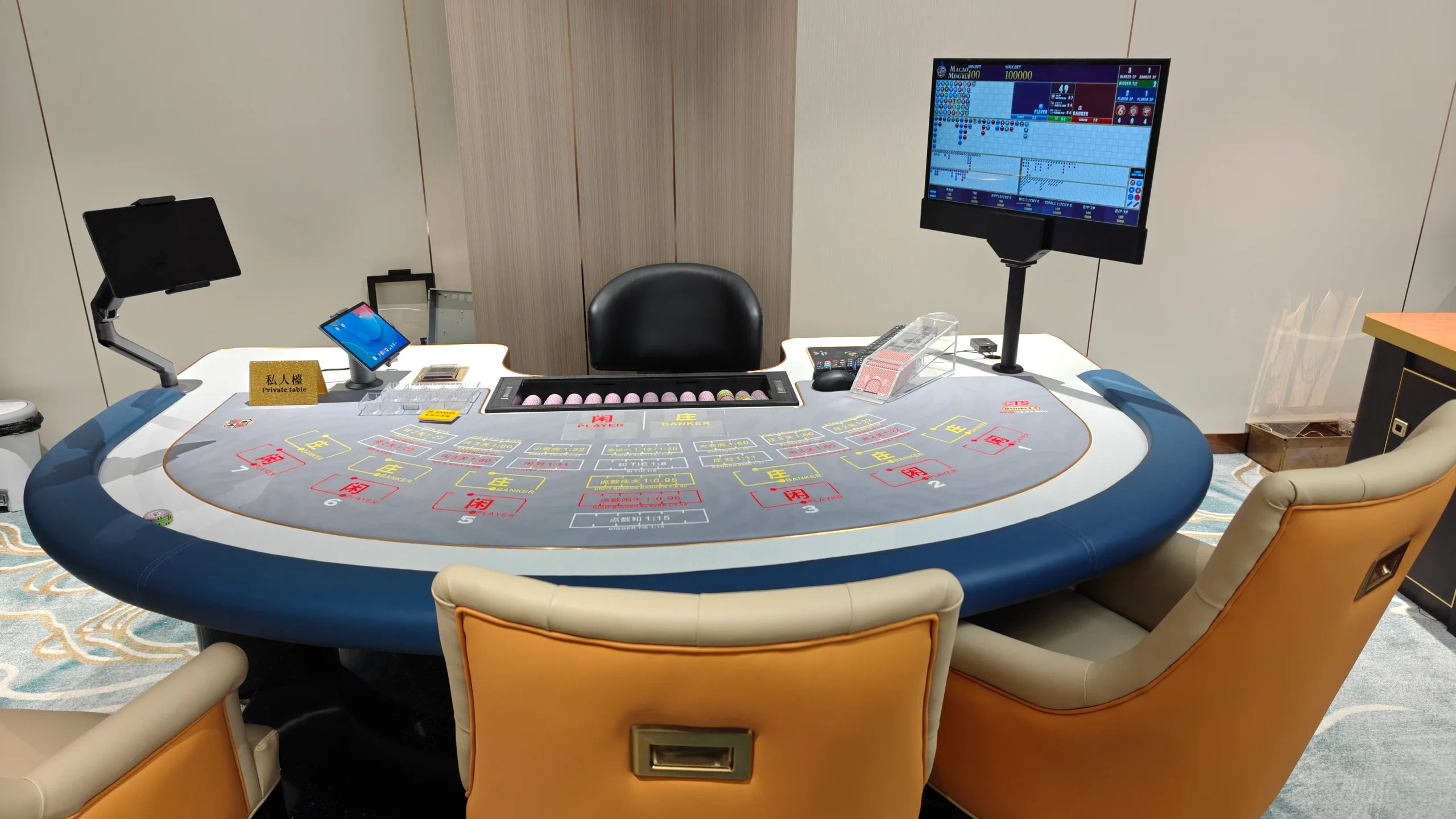
The tag IC stores a 96-bit or 128-bit electronic product code (EPC) that encodes the chip’s denomination (typically 1, 5, 10, 25, 100, 500, 1000), a unique 32-bit or 64-bit serial number, the casino’s operator code, and a checksum for data integrity. When the tag receives sufficient RF energy from the sensor board, it backscatter-modulates the carrier signal to transmit this data.
Tag form factor is a critical design consideration for casino applications. The tag must survive continuous handling, washing, and the mechanical stress of chip stacks. Most casino RFID tags use a die-cut antenna on a PET substrate, bonded to the IC and then encapsulated in a thin protective coating before being embedded in the chip during the molding process. The resulting tag adds less than 0.5mm to the chip’s thickness and does not affect its weight or handling characteristics.
Read performance depends heavily on chip orientation relative to the antenna. A flat tag lying parallel to the antenna array produces a strong signal, while a tag standing on edge may not be readable at all. Sensor boards address this through multi-axis antenna designs and anti-fading algorithms that infer tag orientation from signal strength patterns.
Anti-Collision and Read Accuracy
The most technically demanding aspect of the sensor board is reading multiple chips simultaneously without data loss. In a casino environment, a single player might place 20 or more chips in one betting zone, and all must be read correctly before the round resolves.
The sensor board employs several anti-collision techniques. The most common is tree-walking, where the reader queries for tags with specific prefix patterns, reads them, then queries for tags with different prefixes, progressively narrowing the search space. This approach is reliable but slower than alternatives.
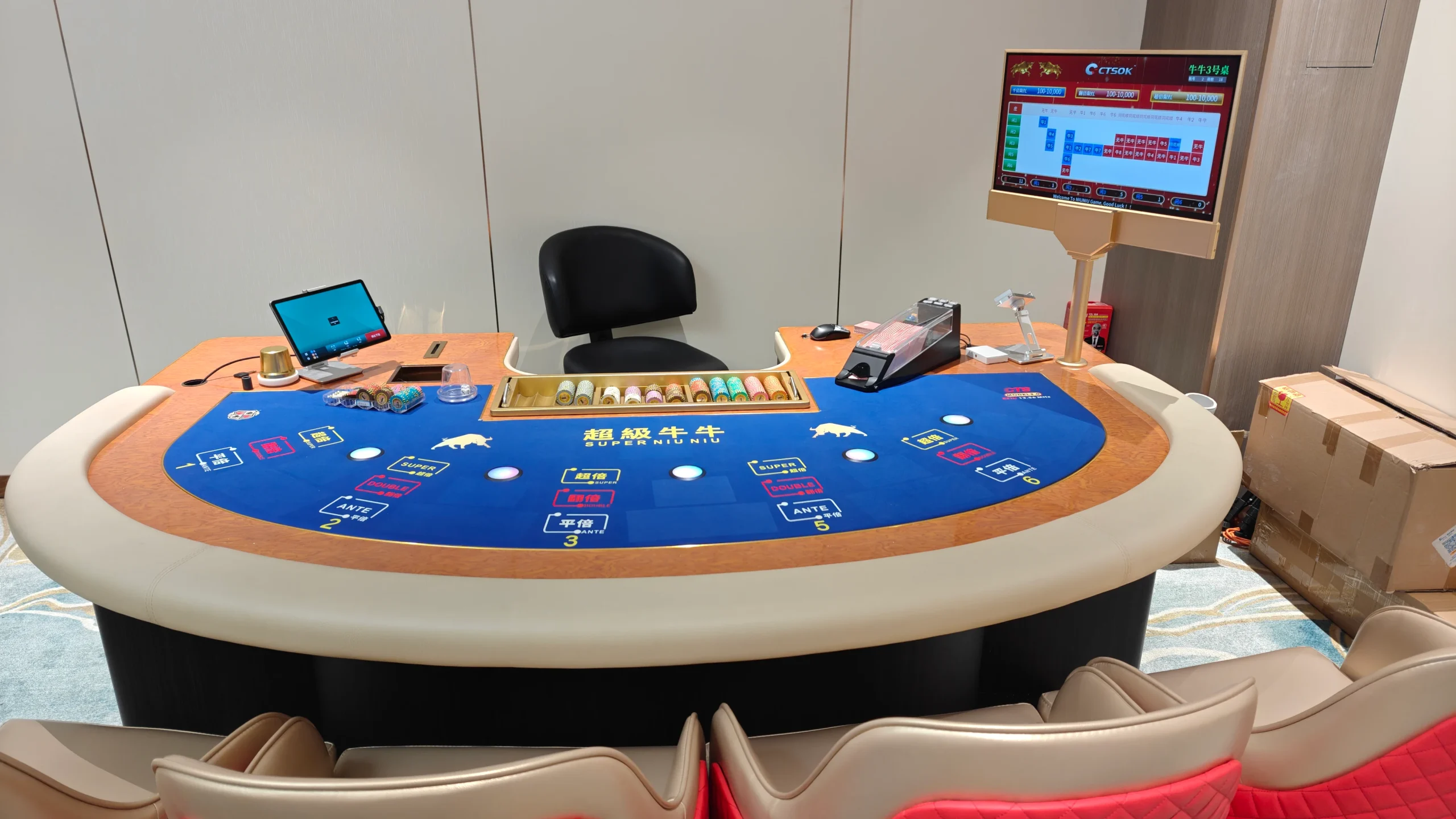
Modern sensor boards use query tags (QT) protocols defined in the EPC Gen2v2 standard, which allow tags to be addressed individually and to respond in predefined time slots. This reduces collisions and enables read cycles as short as 50 milliseconds for up to 100 tags in a zone.
Read accuracy is measured by the false positive rate (reading a chip that is not present) and the false negative rate (failing to read a chip that is present). Casino-grade sensor boards target less than 0.01% false positives and less than 0.1% false negatives. Achieving these targets requires careful antenna design, RF power management, and signal processing. Environmental factors — including ambient humidity, the dielectric constant of the felt, and the presence of metallic objects near the table — can degrade performance and must be accounted for during installation.
Environmental Considerations
Casino environments present unique challenges for RFID systems. The constant handling of chips by dealers and players generates static electricity, which can interfere with RF signals. The sensor board must incorporate ESD protection on all antenna feeds and communication lines Macaumr Casino Supplier.
Temperature fluctuations in gaming pits — typically 18-24°C year-round in most casinos — are not problematic for modern RFID systems, which operate reliably from 0°C to 50°C. However, humidity control is critical. Excessively dry air increases static discharge risk, while high humidity can affect the dielectric properties of the felt and reduce read ranges.
Electromagnetic interference from other casino equipment — including surveillance cameras, lighting controls, and electronic table games — requires careful frequency management. Most casino RFID systems operate in the UHF band (915 MHz in North America, 866-869 MHz in Europe, 920-925 MHz in Asia), which is relatively uncongested. However, slot machine systems often use similar frequencies, and physical separation between RFID table antennas and slot equipment antennas is recommended.
Power quality is another consideration. Casino electrical systems are typically well-conditioned, but sensor boards should include power filtering to reject transient surges and electromagnetic noise on the supply lines.
Integration Points
The sensor board communicates with the casino’s table game management system (TGMS) through a well-defined API. Most sensor board manufacturers provide a software development kit (SDK) that exposes chip read events, zone occupancy status, and system health metrics. The TGMS consumes this data to power player tracking, bet validation, and audit logging applications.
Key integration points include:
– **Chip read events**: Each time the sensor board reads a chip or chip group, it generates an event containing the zone ID, chip IDs and denominations, timestamp, and read confidence score. The TGMS uses these events to validate bets and update player ratings.
– **Zone state**: The sensor board maintains a running state of which chips are present in each zone. When the TGMS requests a zone snapshot, the sensor board returns the current state.
– **Alert triggers**: Configurable thresholds — such as a bet exceeding a maximum limit or a chip from an unrecognized casino — generate alerts that the TGMS can route to pit management displays or surveillance systems.
– **Health telemetry**: Continuous monitoring of antenna performance, RF power output, temperature, and communication link status enables predictive maintenance and rapid fault isolation.
Maintenance and Reliability Expectations
Casino-grade sensor boards are designed for continuous 24/7 operation with minimal maintenance. The expected operational lifetime exceeds 10 years, and most manufacturers warrant the board for 3-5 years of continuous operation.
Key maintenance tasks are limited to periodic antenna calibration (verifying read ranges and adjusting RF power to compensate for felt degradation), firmware updates (delivered over the network to address security vulnerabilities or add features), and physical inspection (checking for damage to antenna traces or connectors caused by table movement or spills).
Mean time between failures (MTBF) for casino-grade sensor boards exceeds 50,000 hours, comparable to enterprise networking equipment. When failures do occur, they are typically localized to a single antenna channel, not the entire board, and the sensor board’s self-diagnostic capabilities enable rapid identification of the affected zone.
Frequently Asked Questions
How many chips can a single sensor board read in one betting zone at once?
Current-generation sensor boards can read up to 200 individual chips in a single zone simultaneously, using EPC Gen2v2 QT protocols and compressed sensing algorithms. In practice, Niu Niu and other high-bet games rarely exceed 50 chips per zone, well within the system’s capacity. The read cycle completes in under 100 milliseconds, ensuring real-time bet validation even during rapid game cycles.
What happens if the sensor board loses network connectivity during play?
The onboard microcontroller maintains a local buffer that stores chip read events when the network is unavailable. Once connectivity is restored, the buffered events are transmitted to the TGMS with their original timestamps, ensuring data continuity. The sensor board continues functioning normally during network outages; only the central aggregation and alerting functions are affected.
Can the sensor board read chips through foreign objects placed on the table?
The sensor board is optimized to read chips specifically and is generally immune to interference from non-RFID objects such as cards, dice, or drinks. However, metallic objects — including certain watch bands, jewelry, or phone cases — can create RF shielding that reduces read reliability. The sensor board’s algorithms can detect when a metallic object is present and issue a zone integrity alert to the TGMS.
How does the sensor board handle chip tags that become damaged during use?
Damaged tags that no longer respond to RF queries are detected during the sensor board’s automated self-test routine, which runs at startup and periodically during operation. The system logs the chip ID as inactive and flags it for replacement. Players and dealers are not directly affected, as the system simply excludes the damaged chip from its reads.
What is the power consumption of a typical RFID chip sensor board?
A fully configured sensor board for a multi-zone gaming table draws 45-60 watts during active reading, with a standby power consumption of 8-12 watts. Power is supplied through Power over Ethernet (PoE) or a dedicated 12V DC adapter, simplifying installation in existing casino infrastructure.